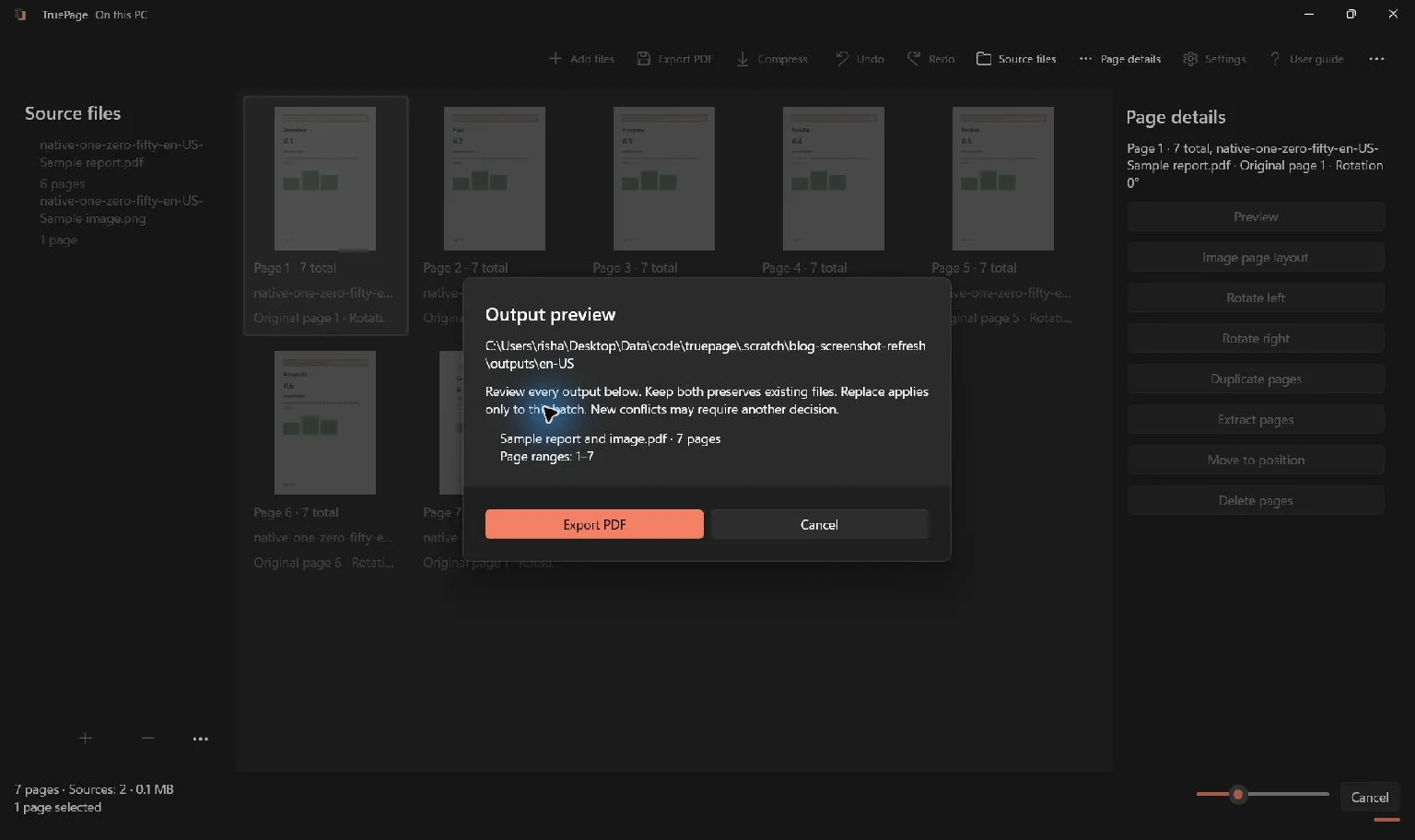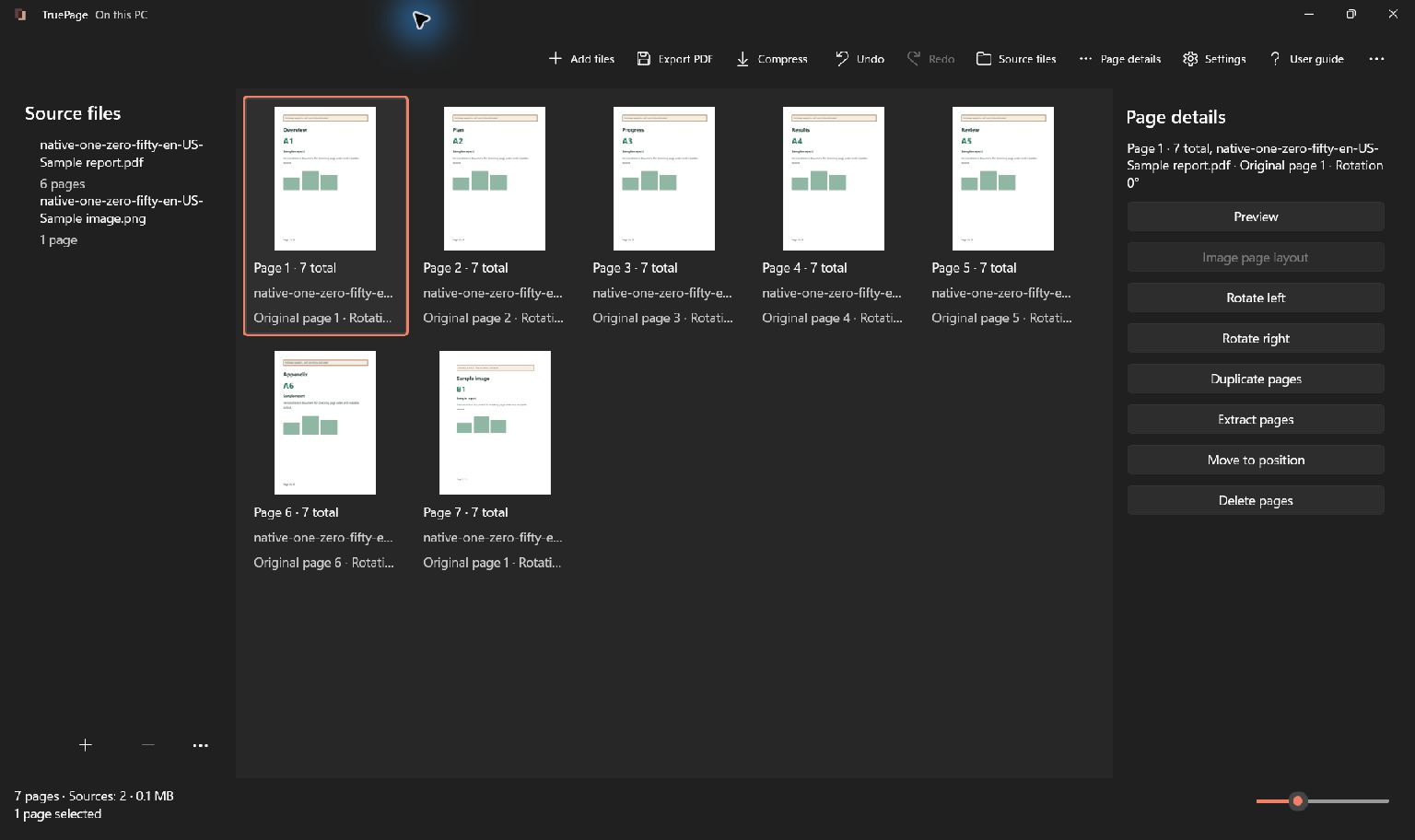
Choose the recipient before assembling the copy: a private client review and a court submission need different contents and approval. The two tables below are fictional assembly examples, not required filing lists. Confirm the recipient’s actual instructions and use only authorized copies; the invented page counts help expose omissions.
Private client review
Use your firm’s approved storage and transfer process. Decide which materials belong in the review copy and preserve authoritative originals separately, especially signed documents. Check privilege and redaction requirements before distribution; choosing a local application does not resolve them. Keep an external exhibit index and review the final page sequence rather than relying only on thumbnails.
| Order | Document | Pages | Check before inclusion |
|---|---|---|---|
| 1 | Document index | 1 | Exhibit references and completeness |
| 2 | Contract copy | 3 | Current approved version |
| 3 | Exhibits | 3 | Exhibit references and completeness |
Expected output: 7 — one PDF, in the listed order. Keep separate files when the recipient requests separate fields or categories.
This retained native screenshot shows controls using synthetic guide files; it does not represent this fictional professional packet.
Court submission or an evidence review
Start with the court’s or reviewer’s instructions for file format, exhibit order and submission. Keep original records and a separate index mapping each exhibit to its source. TruePage does not apply Bates numbering, create bookmarks or establish admissibility. Prepare required labels elsewhere, check that context has not been lost during extraction, and review the final file before filing.
| Order | Document | Pages | Check before inclusion |
|---|---|---|---|
| 1 | Document index | 1 | Exhibit references and completeness |
| 2 | Claim form | 2 | Same person/case |
| 3 | Exhibits | 4 | Exhibit references and completeness |
Expected output: 7 — one PDF, in the listed order. Keep separate files when the recipient requests separate fields or categories.
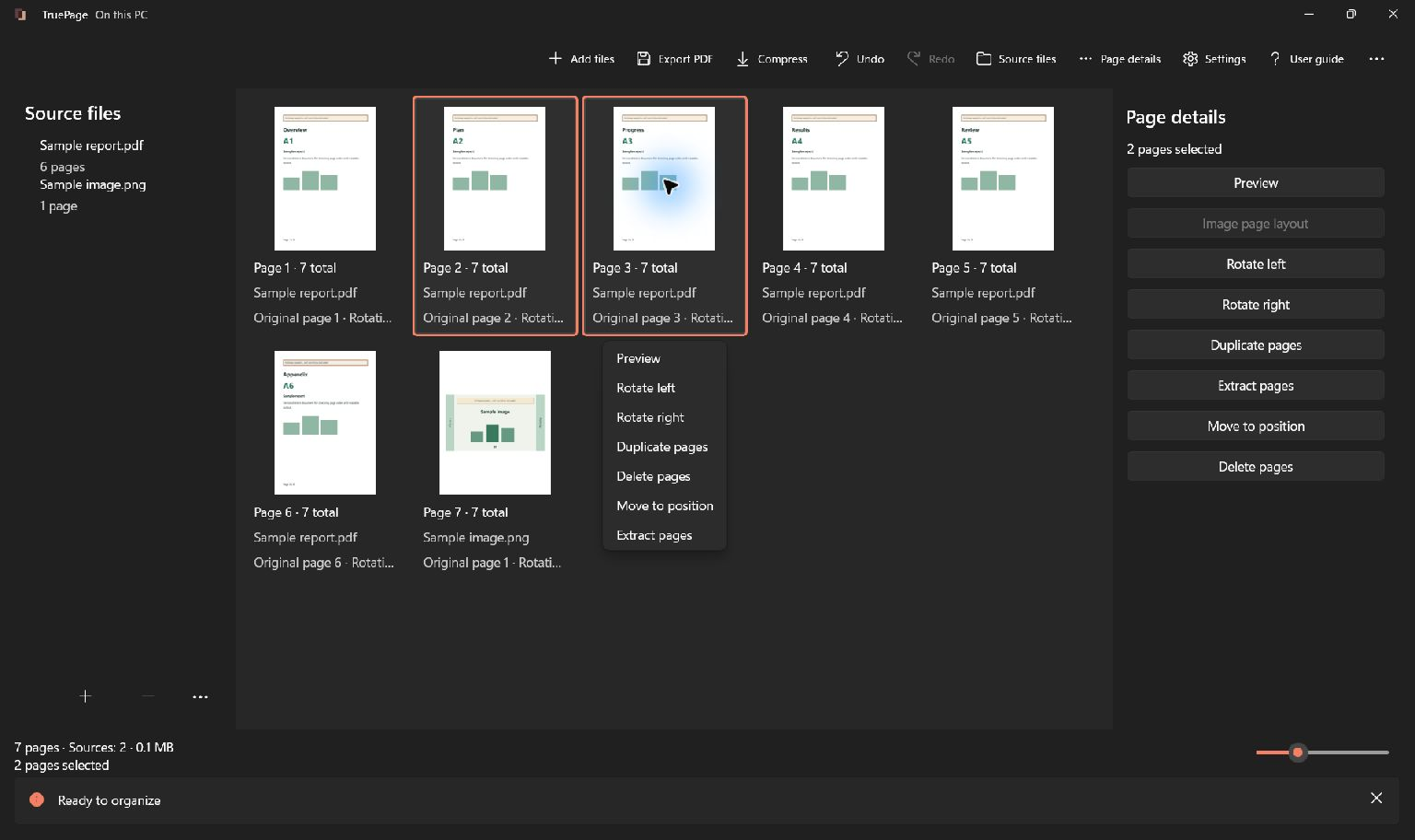
This retained native screenshot shows controls using synthetic guide files; it does not represent this fictional professional packet.
Assemble without losing document boundaries
Exclude unrelated records, superseded copies and material the recipient did not request. Removing a page is not redacting sensitive text on a retained page; use an appropriate tool when redaction is required.
Both examples total seven pages, but they are not interchangeable. In the private-review copy, check the contract at output positions 2–4 and exhibits at 5–7; in the court example, check the claim form at 2–3 and exhibits at 4–7. These are current output positions, not printed labels. A matching total can hide the wrong packet. Give each purpose a distinct filename and check the actual saved copy against its own index before handing it over.
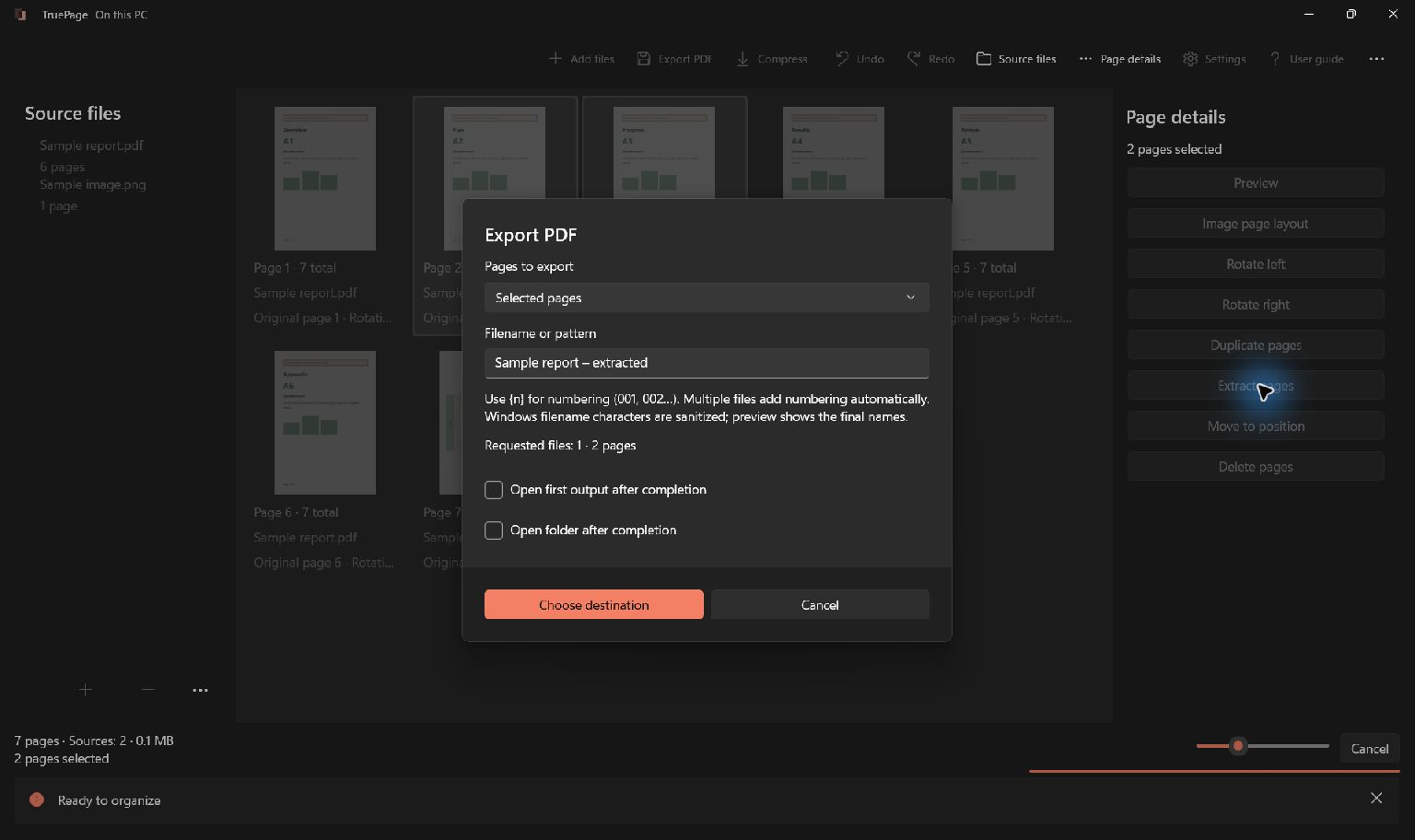
Add the approved files, arrange each complete document in the table’s order, and inspect the boundary between documents. Rotate or remove only the intended page copies. Export all pages under a new name, then open the saved PDF and compare it with the list. If a row is missing or a page belongs to another case, correct the inputs rather than accepting the expected total.
Page organization and export instructions
Before handing it over
Confirm recipient authority, document versions and dates, complete attachments, readable details, filename and output destination. Keep signed originals and authoritative records in their approved system. Use the approved delivery channel; assembly does not complete an upload or submission.
TruePage does not provide OCR, existing-text editing, redaction or signatures. Compression and password operations use a whole source PDF: export the arrangement first. Cloud-synced output folders follow their own policies.

Your pages. Your space.
Available now for Windows 11